Sunday, July 10, 2011

Expansions of Multi National FMCG Companies to Indonesia

Picture 1. FMCG Growth in Asia (6)

Last year FMCG (Fast Moving Consumer Good) industry experienced growth, not only in Thailand, but generally in Asia. On the contrary with Asian market, European market growth was remain slow (2.0% in 2010) (3).

In Indonesia FMCG industry grow double digit (more than 10%) in 2010 (compared to 2009). Total sales in 2010 is about IDR 129.2 trillion (USD 15 million) Between January to April this year,  FMCG sales have reached about IDR 49.19 trillion (USD 5.7 million) and it is projected that until the end of this year it can grow up to 12 - 15% (2).

Shifting consumer behavior of Indonesian household shopper is also an important factor that drive the growth. While previously most Indonesian household shopper is a female, now 26% of them is a male (74% of them is still a female) (1).

Beside Carrefour, Giant, and Hypersquare, now there is another supermarket chain come to the market, Lotte Mart. Even though number of Supermarket and Mini Market keep increasing, but wet market is still remain dominant in certain segment.

Picture 2. Product Distribution in Indonesian Market

RECENT NEWS

Existing Multi National Companies are investing more in Indonesia, such as Unilever and P&G.

1. Unilever (4)
Unilever owned some production facilities in Cikarang (West Java) and Rungkut (East Java). Recently Unilever is building another factory in Rungkut (East Java) as it is going to discontinue its factory in Germany. The new factory is expected to produce soap for South East Asia market.  

Indonesia had an important role for Unilever around the world - Josef Bataona (Human Resources Director of PT. Unilever Indonesia, Tbk.):
  • Unilever considered that Indonesia has huge potential as consumption keeps increasing. However, Unilever's production facilities in Indonesia is not only to supply local market, but also export to Asia and Australia. The target is that in the future Unilever Indonesia could take India's position as the biggest in Asia. 
  • Unilever has about 5,200 work forces. Among them, there are 48 managers who work for Unilever in other countries like Singapore, Malaysia, and Germany. 
Unilever allocated EUR 300 millions budget for expansion, including increasing capacity from 2010 to 2012 - Sancoyo Antarikso (Secretary, PT. Unilever Indonesia, Tbk.)

2. P&G (3)

Currently P&G has no production facility in Indonesia. Most P&G products are produced in (imported from) Thailand. In the last three years P&G has successfully recorded double digit growth in Indonesia. Now P&G is investing USD 100 millions to build a production facility in Indonesia - Sam Kim (President Director of P&G ASEAN).

SUMMARY

FMCG industry in Indonesia is expected to have double digit growth this year. As FMCG market in Indonesia is getting more appealing for investment, more FDI (Foreign Direct Investment) comes to Indonesia. It is clear that more product will be produced and pushed to market. As capacity and variety of product increase, the need of raw materials and quality work forces are also surged. While an industry is growing, its supply chain tends to grow as well.

References:
1. In a Shift, One in Four Indonesian Household Shoppers Now Men
2. Nielsen: Penjualan produk konsumsi cepat habis bisa naik 15% hingga akhir tahun
3. Europe’s FMCG Market Remains Sluggish
4. P&G Investasi USD100 Juta Bangun Pabrik
5. Unilever Relokasi Pabrik Sabun ke Indonesia
6. In Thailand, Challenges and Opportunities for Fast Moving Consumer Goods

Monday, July 4, 2011

Indonesian Music Industry Landscape (Mid 2011)


Picture 1. Global Music Industry Turnover

As Music Industry turnover is declining globally, Indonesia is also experiencing the same pattern. This drives changes in Indonesian Music Industry, especially from 2009 when RBT (Ring Back Tone) service is introduced to Indonesian customers for the first time. 

BACKGROUND

Music industry in Indonesia is filled with multinational, local, and indie music record companies. Some notable music companies are as follow:
  • Mutinational Record Company(s): SMEI (Sony Music Entertainment Indonesia), Universal Music Indonesia, Warner Music Indonesia
  • Local Record Company(s): Musica Studios, Nagaswara, Aquarius Musikindo, Trinity Optima Production
  • Indie Record Company(s): Masterplan Records
As Indonesia is a developing countries, level of piracy in digital music industry is still considered high. Hence, most artists and music recording companies relied to sales of physical devices (especially Audio CD) through music store chain.

Picture 2. Previous Distribution Model 

Now music recording companies also engage direct sales and collaborative product/service with telecommunication industry. The most common form of the collaboration is RBT (Ring-back Tone). As the music company become more dependant to telecommunication companies as a channel to market its products, growth in telecommunication industry will give impact to music industry as well.

Picture 2. Current Distribution Model

Direct sales, in this case, is that Music Recording Company sells an album through alternative channel. Some examples(15):
  • SMEI (Sony Music Entertainment Indonesia) sold Cinta Laura's album titled "KFC Ayo Ngedance Bareng Cinta Laura" (translation: "KFC Let's Dance with Cinta Laura") through KFC (Kentucky Fried Chicken) food chain (about 400 restaurants). The album was successfully sold up to 1 million copies (by last February 2011).
  • SMEI sold Gita Gutawa's Album to Bukopin Bank. Bukopin Bank will give the album for free upon opening new account with minimum balance IDR 1 million (about USD 120).
Note: Cinta Laura and Gita Gutawa are Indonesian local music artists.

There are nine mobile telecommunication network providers in Indonesia:
  • GSM: Telkomsel, XL, Indosat, Hutchinson 3, Axis
  • CDMA Telkom Flexi, Esia, Smart Fren, and Sampoerna Telekom.
The big three (Telkomsel, XL, and Indosat), in total, have about 90% market share(9).

Picture 4. Mobile Network Subscribers in Q1, 2011(11)

Ring-back Tone (RBT) is the song or sound that is heard on the telephone line by the calling party after dialing and prior to the call being answered at the receiving end(1). Music companies provide the song while telecommunication companies sell RBT service to subscribers. An audio CD of a local artist is priced around IDR 40,000 (around USD 4)(2), while RBT costs around IDR 9,000 (around USD 1) per month. RBT is usually only about 40 seconds long. It’s shorter than full track, but RBT gives roughly 40% revenue from production cost that will be shared to music label, artist, and songwriter. In the end, the music company will get 10-20%(3). Total transaction of CD and cassette sales is roughly only one-tenth RBT sales(5). RBT is one solution to battle piracy since it’s a service from provider.

Following the success of RBT, telecommunication companies are trying to market full track songs, some notable milestones are:
  1. Telkomsel offers digital music in the form of full track download and RBT service through Langit Musik since 18 January 2010. The service can be accessed by Telkomsel’s subscribers from http://www.langitmusik.com/wap
  2. Indosat launched Indosat Backstage in collaboration with Univesal Music Indonesia and Musica Studios. The service is launched on 10 June 2011.
  3. Nokia has bundled it handsets with Ovi service which offers local songs (including Indonesian songs). On 4 August 2011, in partnership with three local telecommunication providers (Telkomsel, XL, and Indosat), Nokia Indonesia introduced(6): Nokia Unlimited (unlimited internet for mobile phone), Nokia Internet Messaging Unlimited Package (unlimited messaging), and Ovi Internet Package (unlimited access to Ovi service, including unlimited music download) for IDR 2,000 (about USD 0.2) / day or IDR 20,000 (about USD 2) / month (at this moment, the third service is only offered to customers of Telkomsel)
  4. 4. Telkom, bundled its internet service product with music download service in collaboration with MelOn (a digital music sales company originated from Korea)(7). It is hosted in http://www.melon.co.id and it will cost IDR 25,000 (about USD 3) per month for unlimited download(8).
OPPORTUNITIES AND CHALLENGE

In accordance to increasing number of telecommunication subscribers, number of potential subscribers for both RBT and full track download are also increasing. The market has potential to grow further. As an example, Langit Music currently has more than 12 millions subscribers. In 2010 It successfully pushed 72,000 RBTs, 15,000 full track songs, 3,000 mini songs, and 300 music videos to be downloaded from its site. And booked 30% growth compared to the previous year. This year It is targetted to grow 60% or equal to 20 millions subscribers in 2011(13).

The success of Cinta Laura album which offers music with dance genre/beat and the success of new group bands like SM*SH which offers music with similar genre show that Indonesia starts to follow trend in United States. Dance music has boomed in Western area since several years back with the success of artists like Lady Gaga and Rihanna and it's just started here.

On the contrary, full track songs are available to be downloaded for free through torrent or file sharing sites such as 4shared and Indowebster. A non profit organisation, Heal Our Music, recently did a survey. In April 2011, it monitored 15 sites that provide free music download and found out that there were about 104 millions download in that month only(14). While current regulation is considered to still not be able to stop or make people think twice before download pirated songs(11), it also shows huge market opportunities if illegal download activities can be shifted to legal and paid download activities.

Different with RBT which can be enjoyed by others, track download is more personal. This is another challenge due to the fact that Indonesian people like to share and DRM will avoid them to do so. In this state, both music industry and telecommunication industry may just want to see responses from the market and investment will possibly be slowed down until it really shows acceptable results.

SUMMARY

Digital music business in Indonesia is still considered new and potentially growing in at least the next few years. Along with growing market of smart phones (especially BlackBerry and iPhone) and mobile internet service, synergy between music recording companies, mobile phone content developers, and telecommunication companies seems to be the future of digital music industry. Although there are also challanges, efforts and strategies that are (possible to be) pursued to mitigate these risks.

Sources (viewed on 27 June 2011):
1. Wikipedia
2. Disctarra (a local music store chain)
3. RBT Penangkal Pembajakan
4. Menghitung Profit dari RBT
5. DRM Membawa Gairah Baru Industri Musik
6. Nokia Gaet Empat Operator untuk Paket Internetnya
7. Telkom Dukung Speedy dengan Konten Music Digital
8. Speedy Music Unlimited
9. Review of Prepaid SIM Card in Indonesia
10. Prospek Bisnis Full Track Download Menjanjikan
11. Beban per Pelanggan XL Terendah
12. PAPPRI: Tata Niaga Musik Harus Direstrukturisasi
13. Telkomsel Pertimbangkan Akuisisi Penyedia Konten
14. Musik Indonesia di Ambang Kehancuran?
15.  Nyaringnya Penjualan Album Langsung

Saturday, May 28, 2011

BlackBerry in Indonesia

The phenomena of BlackBerry in Indonesia is that it is able to penetrate Indonesian market without advertising efforts and only relying on word-of-mouth.

Here are some facts about Indonesia mobile network:
  1. Based on The Nielsen Company (2011), mobile phone penetration triples in 5 years
  2. Picture 1. Indonesian Mobile Consumers Trend
  3. Based on Frost and Sullivan Research on mobile (2011), Indonesia is the 3rd largest wireless market in Asia
Both facts clearly show that Indonesia is a country with exciting market opportunity for mobile network operators.

Currently, there are two cellular network system adopted by mobile network operators in Indonesia:
  1. GSM (Global System for Mobile communication)
  2. CDMA (Code Division Multiple Access). 
Among all mobile network operators in Indonesia, Telkomsel is the largest GSM operator in Indonesia with more than 100 million subscribers from more than 200 million people in Indonesia (as on 30 April 2011). Near the end of last year (2010), Telkomsel said to Jakarta Pos that from 94 million customers that they had in the country, BlackBerry users make up less than 1 percent of our customers, or 750 thousand users.

Other operators that currently offer BlackBerry Internet Service (BIS) are:
  • Indosat (GSM)
  • XL (GSM)
  • 3 (GSM)
  • Axis (GSM)
  • Smart (CDMA)
  • Esia (CDMA)
How potential Indonesian mobile user market for Blackberry?
  • Indonesia is the largest Blackberry market in the world - you see taxi drivers there on Blackberry Messenger (AMSRS, 2011)
  • With more than two million users, Indonesia has become the largest market for BlackBerry in Southeast Asia and has seen its ranks of developers here swell (The Jakarta Globe, 2011)
The success of BlackBerry in Indonesia is because BlackBerry is used by greater market segment (not only business people as BlackBerry primary target market). Indonesian people is considered caring to their communities. They have a need to get updates about their communities (including rumors and gossips). Community is important for Indonesian people and BlackBerry has feature that enable them to have better access to communities.

The main features that made people choose a BlackBerry device are:
  • BlackBerry Messenger
BlackBerry Messenger (BBM) is a messaging app and service that has no "Sign Off" button or "Invisible" profile. Hence, it is usually always active (except if the owner cancels their BlackBerry Internet Service (BIS) plan) and it is also indirectly forced the users to give response. Indonesian people usually prefer sending a message than making a phone call. BBM users pay BIS daily, weekly, or monthly for unlimited use of the messenger (and other features depend on the package they choose). BBM users are able to update status (and also location or song they currently listening to). It makes their contacts can get recent updates on what happens to their contacts and furthermore also recent news. All contacts in BBM have to be approved before they can start sending messages. All of those make BBM a quick, easy, up to date, and trusted messaging service. 

Other features in BBM make collaboration easier through conference chat and groups. It also makes BBM a place to built communities (through groups). In practice, BBM is really useful to manage networks, discuss, exchange files (incl. pictures), and even market a product or service since messages sent through BBM are from contacts that have been approved.

In practice, without using BlackBerry and BlackBerry messenger, it is difficult to keep up with others because they use BlackBerry and rely on BlackBerry messenger.
  • Third Party Apps, especially for Twitter and Facebook
Social Networking Sites are popular in Indonesia because it enhances access to communities (Groups in Facebook) and timely updates on what happen to people in their communities (real time news update in Facebook and Twitter). Mobile internet connection that is considered slow makes mobile phone users rely more on third party apps to access the sites. Figure below may give a better picture of digital media in Indonesia.

Picture 2. Digital Media in Indonesia

Source:
  1. The Nielsen Company, Nielsen Wire
  2. Jakarta Pos
  3. The Jakarta Globe
  4. AMSRS

Wednesday, April 13, 2011

Foreign Actresses Starred in Indonesian Horror Movies

Indonesian Movie Industry is famous with its horror movies (some notable Indonesian Horror Movies are Jalangkung and Kuntilanak). However, it recently has shifted to a semi-porn movie packaged into a horror movie.

In recent years (since 2010), some movie studios hired overseas porn actresses to star in Indonesian Movies. Some of those are:

1. "Suster Keramas" / "Evil Nurse"
Release Date: 31 December 2009
Genre: Horror
Studio: Maxima Pictures
Cast: Rin Sakuragi (Japanese AV actress)
Trailer:


2. "Menculik Miyabi" / "Kidnapping Miyabi"
Release Date: 6 May 2010
Genre: Comedy
Studio: Maxima Pictures
Cast: Maria Ozawa (Japanese AV actress)
Trailer:


3. "Rintihan Kuntilanak Perempuan"
Release Date: 14 October 2010
Genre: Comedy
Studio: K2K Production
Cast: Tera Patrick (American AV actress)
Interview with Tera Patrick:


Upcoming Movies:
- "Suster Keramas 2" / "Evil Nurse 2"
Release Date: 2011
Genre: Horror
Studio: Maxima Pictures
Cast: Aoi Sora (Japanese AV actress)

- Pocong Mati Goyang Pinggul/ “Shrouded Corpse Bathing While Hip-Shaking”
Release Date: 2011
Genre: Horror
Studio: K2K Production
Cast: Sasha Grey (American AV actress)

ABOUT THE MARKET

Indonesian GDP per capita is USD 4300 (The World Fact Book, 2010) or about IDR 40 million per year. Theatre ticket price starts from IDR 10,000 (about USD 1). Indonesian Movies are also competing with foreign movies which are relatively more preferred to watch, especially Hollywood Movies.

Gross Income of Indonesian Horror Movies (early January 2010):
  • "Kuntilanak Beranak": USD 313,260 (1st week)
  • "Hantu Jamu Gendong": USD $561,679
  • "Setan Budeg": USD 668,453
  • "Pencarian Terakhir": USD $234,290
  • "Takut": USD $73,239
  • "Pocong Vs Kuntilanak": USD $704,492
  • "Sarang Kuntilanak": USD $419,380
  • "Hantu Aborsi": USD 563,013
Hence, it is logical if Indonesian movie producers are trying to sell Indonesian movies to foreign market.

The selected foreign actresses are popular outside her own country. Ody Mulya (the producer of Maxima Pictures) told Kapanlagi.com that Aoi Sora is well-known in Asia-level, for example in Thailand. Thus, when he announced "Suster Keramas 2" (Evil Nurse) in Hong Kong Film Market, some people expressed their interest to bring the movie to their countries. KK Dheeraj (the producer of K2K Production) said the seven countries that have confirmed would buy "Pocong Mati Goyang Pinggul" (starring Sasha Grey) were Singapore, Malaysia, Taiwan, Thailand, United States, Hong Kong, and Canada.

ABOUT THE RISK

Ody mentioned that presenting a porn star was not without risk. Three risk that need to be considered are:
  • High costs,
  • Extra security, and
  • Ready to handle protest
There is a concern that semi-porn movies are censored. However, Ody claimed that even though the movies were starred by AV actresses, but those were not porn movies, thus most part of the movies passed the evaluation conducted by "Lembaga Sensor Film" (Film Censorship Board).

Note: AV = Adult Video

Source:
- Aktris Porno AS Bintangi Film Nasional
- Pilih Mana: Sora Aoi Atau Sasha Grey

Tuesday, March 15, 2011

Rethinking: Nikkei Average Fell After The Disaster

Nikkei Average fell after Japan was hit by Earthquake + Tsunami on 11th March 2011.

Here is the Nikkei Average Price:

Picture 1. Nikkei Average Price from 8 - 16 March 2011

As you can see in the graph above, on 15 March 2011 (just two days after the earthquake), Nikkei was at the lowest since almost 2 years ago.

Source: WSJ Asia

Nikkei (or Nikkei Index or Nikkei 225) is weighted average price of 225 stocks (225 companies) in Tokyo Stock Exchange. So, when Nikkei goes down, it means that MORE share price of the companies which are the components of the index go down, not ALL shares. Thus, the shares that currently you hold may not change or go in the same direction with Nikkei.

Wednesday, March 9, 2011

Kim Taeyeon's Birthday and Indonesian Music Industry

9 March 2011 is Kim Taeyeon's 22nd Birthday. She is a member and the leader of So Nyuh Shi Dae (SNSD) or Girls' Generation. Several hours before her birthday, both "Kim Taeyeon" and "SNSD Sooyoung" were trending in Twitter and on her birthday, she was on top of Global Trends in Twitter. There was a rumor that Sooyoung bought a mushroom cake for her. That's why both of them were trending. Beside that, in her birthday, SONE (the name for SNSD fans) did things more than my expectation (and may be a lot more people's expectation). They did:
  1. On 8 March, a fan wrote, sang, and recorded a song titled "Taengday Tribute Song", then uploaded it to various internet sites.
  2. On March 9th, "Sisters" (SNSD’s Naver fan cafe), "HwaSuEunHwa" (Daum fan cafe), and "HwaiTaeng" (Taeyeon’s Naver fan cafe) put and advertisement in a sport newspaper to congratulate her 23rd.
  3. Fans volunteered and donated 1,000,000 won (in total) to the Chungbok Headquarters and the Junbok Headquarters of the Green Umbrella Children’s Foundation under her name.
Source: SNSD fans go all out for Taeyeon’s 23rd birthday

That made me think about Indonesian Artists and how far would their fans go for them and furthermore about the Indonesian Music Industry. Indonesian Music Industry is growing, some of the indicators are:
  1. Music Industry could innovate and make profit from "Ring Back Tone" service (collaborated with Telecommunication Industry).
  2. Every year there are new artists and artists that has debuted still produce new albums. People listening local music more than international music. Thus, local music industry is strong. The music is even exported to countries surrounding Indonesia like Malaysia and Singapore.
  3. Concerts were held in various locations supported by sponsors. Thus, most concerts for local artist are free. However, even though concerts for international artists mostly were not free, but those could sell out long before the concerts were held. Hence, the hype is still exist.
However, it still lack of development in some activities along the supply chain such as:
  1. Lots of new artist come from themselves, not developed by a company. They form themselves, they made their own music, and they show their works in competitions, shows, and elses. It's a good thing, but they may fit to a market that's already tight and they may not have a well-planned concept and furthermore integration with how they should perform, what kind of merchandise will be available, and elses.
  2. Digital music download is popular in developed countries, but not here. People are still buying pirated CD, downloading illegal music file (from peer-to-peer network, torrent, etc.), or buying illegal music file through retailers. The digital music has been available for example in Ovi Store and some other local sites, but it failed to gain popularity because it still lack of easiness-to-use and trusted-payment-method (lots of Indonesian are still afraid to use credit card for online payment due to lack of both promotion and law protection).
  3. Music store is dominated by a certain group (although there are some local competitors, but it's difficult to compete with the market leader).
  4. Paid concerts for local artists (for certain purpose like new album tour) are rare. Thus, amount of paid concerts are low while in developed countries artist can make a profit from it.
  5. Ticket distribution network hasn't been well established. Jakarta Concert and Raja Karcis do it, it's not nation-wide enough since they are lacking of counters to sell the ticket and the online site is also not improving significantly.
Hopefully things will change and Indonesian music industry can be more lively.

Happy Birthday, Kim Taeyeon of SNSD!

Thursday, February 24, 2011

Comparison of International Call Tariff in Indonesia

There are three main GSM operators in Indonesia, that are XL, Telkomsel, and Indosat. All of them offer VOIP service as follow:
1. XL
    01000 + Country Code + Phone Number
2. Telkomsel
    01017 + Country Code + Phone Number
3. Indosat
    01016 + Country Code + Phone Number

The Tariff of the three operators is as follow:

Embedded File 1 Tariff Comparison

Note: The tariff used to be shown above is no longer relevant.

Overseas Graduates are Better Than Local Graduates (A Critic to Local Culture)

I think you may agree with me that it's not true, however I notice that:
- Overseas graduates tend to be more preferable by employers
- Overseas graduates tend to get higher salary
Is it fair? it may be since overseas graduates pay more than local graduates (they invested more fund for their education).

Before I share my thought about overseas graduates who are better than local graduates, I would like to discuss about lifestyle of Indonesian households and some local business:
1. The household of families that can self-fund their children to tertiary education usually consist of parents, children, and helpers. The helper will help the family members to do things that need to be done in a household, such as washing dirty clothes, going out to buy things as instructed by the family members, cooking dishes, and so on.
2. There are local business to help people do things, for example:
- In Airport, when the passenger is claiming his baggage, there is a porter that comes to the passenger and offers help to take the baggage from baggage claim area to parking area or taxi area.
- As an alternate to renew or make a driving license in the police station or motor registry, an administration bureau can take care of it (it will save time to queue, do tests, and so on).

It's different with living overseas, in Indonesia people can get help in doing even simple tasks. The effects of this are:
1. People tend to depend on others.
2. People have less achievements since they did less, thus there are a lot that they can't do (because of the intermediaries).
Further effect of those is that people have less confidence that they can do even those small things by themselves. If they don't have confidence over the small things, how can they have confidence over the bigger matters.

Thus, I think that overseas graduates, who usually do things on their own and depend on their own abilities, will be able to do better than local graduates who depend on others a lot and not confidence with their own abilities.

It's all about confidence.

Wednesday, February 23, 2011

Artists Endorsing Intel in 2011

In this early 2011 Intel has done interesting things for its marketing campaign.
- 18 January: Intel Korea unveiled a collaboration song with Korean Music Group: Girls' Generation (a.k.a. SNSD or So Nyuh Shi Dae). The title is Visual Dream. Here is a preview of the new Girls' Generation video which will kick off Intel's Korean marketing campaign for 2011. Girls' Generation will be featured in Intel's marketing materials in Korea, Japan and other selective Asian countries.

Picture 1 Girls' Generation - Intel Display

- 25 January: Intel hired Will.i.am to fill 'Director of Creative Innovation' position. Will.i.am is a famous music artist, producer and member of a music group: The Black Eyed Peas.

Here is the video:

Video 1 Girls' Generation - Visual Dream

Intel is the market leader in semiconductor chipset business. Intel supplies parts to IT Manufacturers, like HP and Samsung. Hence, Intel is mainly focused in B2B (business-to-business) marketing scheme. Considering those and the theme songs for its commercial in the previous years, those looks like a really awkward move.

List of known songs used in Intel commercials:
2006: Carlos Jean - Mr. Dabada
2007: New Young Pony Club - Ice Cream
2011: Girls' Generation - Visual Dream (Intel Asia)

Do Intel want to look cool?
May be. Intel is often related to Technology and for some people, technology is for Nerds. Intel may want to change that.

Intel's current mission is This decade we will create and extend computing technology to connect and enrich the lives of every person on earth.

Deborah Conrad, Intel vice president and chief marketing officer, testified "Intel is in the midst of transforming the way we communicate with people, Our partnership with will.i.am is a prime example of how we want to convey and deliver the Intel experience. It’s imperative that Intel and our innovations are kept in front of the global youth culture that embraces new devices and new forms of communication and entertainment."

Let's have a look on recent popular news about Intel:
- Intel launched 2nd Generation Intel Core processors (on 18th January, along with the first time Girls' Generation - Visual Dream was showed to public)
- Intel found design flaw in it's Sandy Bridge chipset (on 31st January)
- Intel will launched a new connectivity technology, called: Light Peak (expected on February 2011)
- Additionally, AMD as Intel's direct competitor had a competitive product lines since last year, even though AMD hasn't been able to keep up with Intel, but AMD started to give competition since more and more IT manufacturing companies started to implement AMD products in their product lines.

There are at least two considered innovative things came out from Intel, the 2nd generation processors and the Light Peak connectivity technology. Choosing popular icons to endorse Intel will be beneficial since customers is usually unwilling to change and those new campaigns may help the company to impress all the potential customers which are also expected to accelerate brand image in customers perspective.

Here is the commercial:

Video 2 Intel SNSD Commercial

Note:
Remix version of Girls' Generation - Visual Dream can be found in Aeria Remix

Monday, February 21, 2011

No More Foreign Movies in Indonesian Theatre?

Indonesian government is planning to implement new tax policies. It will tax imported movies and MPA (Motion Picture Association), which represents most hollywood studios, was against it, followed by IKAPIFI (Ikatan Perusahaan Film Impor Indonesia) which imports Bollywood and Chinese Movies. Thus, if nothing changes, no more Hollywood, Bollywood and Chinese movies will be screened in theaters.

This is a move to protect local movies, however this will also have significant impacts because Hollywood is the market leader for theatrical movies and a benchmark in the industry. Some of the notable impacts are:
- Theatres have less options since there are no more Hollywood, Bollywood and Chinese movies
- Less people will go to theatres
Thus,
- Ticket price may increase - business will be bad for
- Movie rental and pirated DVD seller will be more advantageous
- Private studios will be more advantageous
- There is a possibility of increasing demand for cable TV and TV channels through satellite
- Local movies will have more variation (not dominated with only horror and soap opera movies like now)

There is an impact on new policies. it may be negative, but there is still positive impacts as well. Keep positive thinking and make use of this opportunity.

Update(s):
17 June 2011 (3). Minister of Finance has signed a new tariff regulation for imported movies. It will be around IDR 21,000 - 22,000 (about USD 3) per minute per copy. One movie usually has 20 - 40 copies. Two problems still exist:
1. The new regulation still need to be signed by Minister of Justice and Human Right.
2. Two importers/distributors of Hollywood Movies, Camilla and Satrya, have their licenses still suspended.

13 July 2011 (4). PT. Omega was reported to have earned NIK (Nomor Induk Kepabeanan), license number to do export import activities since June 2011, but it hadn't started to import any movies.

24 July 2011 (5). PT. Omega imported 99 copies of Harry Potter and The Deathly Hallows Part 2. It will be the first Hollywood Movies from MPAA imported to Indonesia after the incident. The movie was expected to be available in Indonesian cinemas by the end of July 2011.

29 July 2011. Three days before Ramadhan (fasting period for Moslems), Harry Potter and The Deathly Hallows (the only Hollywood movie title imported so far) was available in Indonesian cinemas, both in 21 group and Blitzmegaplex group.

Related Articles:
1. Theaters may stop screening imported films
2. Indonesians scramble to keep Hollywood films
3. Ini Tarif Baru Impor Film (viewed on 26 June 2011)
4. Film Impor Harusnya Sudah Masuk Bulan Lalu (viewed on 7 August 2011)
5. Akhirnya, Film Box Office Hollywood Tayang Lagi (viewed on 7 August 2011)

Sunday, February 20, 2011

Foreign Universities Go To Asia

While lots of MNCs open more and more branches in Asia, especially Singapore, China, and India, lots of universities become MNC as well. It used to be like this: prospective students go overseas to receive foreign education. Now, foreign education comes to local area and gives education locally blended with foreign taste. Here are list of some foreign universities that set up branches in Asia:

1. Singapore
- INSEAD Asia Campus (from France)
- Essec Singapore (from France)
- John Hopkins University in Singapore (from US)
- University of Chicago: Booth School of Business (Singapore Campus) (from US)
- New York University: Tisch School of The Arts Asia (from US)
- SP Jain Center of Management (from Middle East)
- Curtin Singapore (from Australia)

2. India
- Virginia Polytechnic Institute and State University (Virginia Tech) (from US)
- Georgia Institute of Technology (Georgia Tech) (from US)
- Boston University (from US)
- Middlesex University (from US)
- Duke University (from US)
- York University: Schulich School of Business (from Canada)

Different with Singapore and India where lots of the citizens can speak English, in china most of the citizens speak chinese with local dialect. Thus, some foreign universities choose to do a joint program with local universities. Related articles:
- China's B-School Boom
- China's B-School

3. China
- NYU Shanghai (from US) - with ECNU
- Xian Jiaotong - Liverpool University (from UK) - in Suzou
- CEIBS (from Europe) in Shanghai - supported with IESE Business School (from Spain)
Note: Cornell University and Columbia University (both of them are from US) also set up a branch in Shanghai

Why do you think it's happening?

Some of the issues to open branches in Asia are:
1. Some universities in developed countries like England and United States faced decreasing number of enrollment every year and increasing acceptance percentage (those universities became less selective, thus the quality of their graduates might decrease).
2. Universities in developing countries have developed significantly, thus they have enough offerings to attract potential students to choose local education rather than foreign education.
3. Some other universities have done it, so the rests should follow or would be left behind the competition.

Some of the issues for not studying overseas are:
1. For postgraduate study, a lot of prospective students have already had a family and it's difficult for them to go abroad for studying or it's ridiculous to leave work for studying overseas.
2. Exchange rate makes overseas education becomes expensive, not only the tuition fee, but also the living cost.
3. Culture barrier, for example it is uncommon for some Taiwanese families to send their daughters to study overseas.
4. The quality of local education is considered acceptable, so there is no need to study overseas.

Indonesian Idol, Is There Any?

I wrote this when I realised that a crisis might occur in our country, it’s a crisis of character and icon. I don’t know whether it’s real or it’s just my imagination (hopefully, it’s just my imagination).

I asked this questions to my friends:

“If you are asked to choose an Indonesian icon that you idolise, who are you going to choose and why?”

Some of the positive answers were:
“Ari Wibowo because he is handsome, nice, and seems smart”
“Gus Dur because he made the Chinese New Year as a national holiday”

Some of the negative answers were:
“Nobody because I am nobody”
“Who will you choose? I have no idea”
or similar answers. More people give me a “No” than a name.

I asked myself, who do I mean by an Idol? For me, an idol is someone that I look up to, someone whose life I want to follow, someone that becomes an example for my life (a role model).

In that case:

1. If I think about fictional characters, there are characters like Leigh Ann Tuohy in The Blind Side (a Hollywood movie) or Go Eun Sung in Shining Inheritance (a Korean drama). Both of them has strong characteristics, which make them really inspiring and admirable. In Indonesia, who do we have? Can you see Fitri Rahayu from Cinta Fitri (an Indonesian drama/sinetron) as a role model?
2. If I think about public figures, there are figures like Oprah Winfrey which are really inspirational in her talk shows. If I think who are the most popular these days, two names come up, Jupe (Julia Perez) and DP (Dewi Persik). With all their affairs, could I idolise them? I don't think so. We used to have Aa Gym (Abdullah Gymnastiar), but not anymore. Right now, I couldn't think of anyone else.

Based on thoses cases, we might be in crisis. An Idol crisis.

If you also agree that this is happening and by any chance you know someone from the media/publication, please help our country by sharing this to them, so they will be aware about this as we do, then we may be able to start doing something about it.

Tuesday, February 1, 2011

Inflation in Indonesia

It was reported that inflation in Indonesia has reached 21 months high. Last year, the inflation was 6.96, quite high compared to 2.78 in 2009, but still lower than 11.06 in 2008.

Picture 1 Inflation in Indonesia

Inflation means prices for goods and services in general is increasing, in other words, most things become more valuable, except MONEY. Thus, if inflation rate is still increasing or as high, it's better to acquire assets than keep cash in hand and sell the assets when inflation rate has been stabilized to around 2-3% per year.

Now the inflation has been increased to 7.01 (accumulated from 2010). Purchasing power definitely keeps decreasing, thus general consumption is also decreasing. Weak consumption condition and the possibility of increasing borrowing cost due to increasing BI rate make me think that now may not be the right time to establish a new business venture.

Source: Biro Pusat Statistik, Bloomberg

Saturday, January 29, 2011

Indonesian TV Industry (early 2011)

Most of TV programs are still locally produced. Number of religious films have decreased compare to about 1 year ago, in exchange there are new variety shows appeared, like "Hitam Putih", "Mama Udah Bobo", etc. Some variety shows are influenced by foreign variety shows, like the use of comments in bubbles (I saw similar characteristic in Korean variety shows). TV Drama is still favored by big-budget TV channel to fill prime time everyday. However, the quality of the dramas have been deteriorating (the stars, directing, video quality), so it seems that the producers allocate less budget than before.

In general, variety shows requires less budget than TV drama. Thus, in general, it seems that TV channels seem to reduce cost by decreasing cost of the programs. In Indonesia, TV is the most influential channel for marketing, thus main income of the TV channels come from advertising. During difficult times, in common, firstly companies will cut budget for advertising. Thus, if the TV channels tried to reduce cost, it may mean that they got less income, companies spent less in advertising and our country might not in a good economic condition even though it was reported that our country has managed to survive from GFC and booked positive GDP growth.

Friday, January 28, 2011

Indonesian Music Industry (early 2011)

2011 is an exciting year for most people because most country start showing positive GDP (Gross Domestic Product) after some bad years because of the GFC (Global Financial Crisis). I returned back to Indonesia after 1.5 years studying in Australia with high expectation. Then, yes, my home country has successfully surprised me.

Indonesian music industry is still as strong as before. Less foreign music played in local TV channels and even MTV is no longer airing in any local TV Stations. However, I still see some local musicians is influenced by foreign musicians, such as Korean musicians.

There are some local bands that are considered using Korean Music Concept, some of them are SM*SH and 5 Bidadari.


Video 1 SM*SH - I Heart You


Video 2 5 Bidadari - Aku atau Dia

As a comparison, these are some popular Korean Music Video.


Video 3 2AM - Can't Let You Go Even If I Die


Video 4 Wonder Girls - Nobody
(Note: I used to put SNSD - Oh! for video comparison, but I think this one is more appropriate)

I actually think that this is actually not a bad thing since it may diversify or even protect local music industry, since then there are Indonesian music with similar concept with Korean music. However, when I saw those two Indonesian Music Video, I kept asking myself, why couldn't we made a music video as good as the Korean?

See Indonesian TV Industry (early 2011).

Saturday, December 4, 2010

Social Network for New Business Venture

Social network is always about me and my network, but if "me" is changed into "the business", then it will also be "the business's network". Nowadays, Facebook seems to be the most popular one, however that may not be the case in the other part of the world and Facebook may not provide other facilities that are offered by another social networking site.

The more social networking site appears, the broader the function of social network since each site will tend to appear different to the others. I will anayse how social network can be used in supporting both primary and secondary activities of new business venture.

Based on Alexa Global Page Rank, there are 4 social network site in top 25 that are:
- Facebook
- Twitter
- MySpace
- LinkedIn

Where possibly each social networking site has a role in?

Picture 1 Social Network Sites in Value Chain Model

The model above shows that social networking sites can be used in both a secondary activitie (human resource management) or a primary activity (marketing & sales). Both activities have a similar characteristic, that is a need to interact with external entities such as labor market and customer market.

1. Human Resource Management
LinkedIn can be used to find either a partner or an executive. In LinkedIn, people can endorse others, so through LinkedIn, HR can make a better judgement from that.

2. Marketing and Sales
Facebook and MySpace have people's information. Thus they can put ads based on target market of the product that is advertised. While Twitter can help to push information to anyone and FourSquare can mark your product and service based on your location.

It may be difficult to organise all the social networking sites, but now there are some softwares that you may can use like TweetDeck or Windows Mobile 7 to manage all your social network accounts.

Monday, November 29, 2010

Jobs for Overseas Students

During my study in Australia, I met lots of people studying business. Some of them are from developed countries like Germany and Japan, but some others are from developing countries like myself (Indonesia). The developed countries like Germany and Japan have more multi-national company that have branches in Australia, while developing countries don't. Thus, there are more multi-national companies from developed countries that are operating in Australian more than developing countries.

In terms of looking for a job, either internship, part-time job or full-time job. Students from developed countries will have more opportunities to get a job since they can apply to multi-national companies originated from their own countries. Those students also have another advantage such as in language since they could speak fluently languages that are used by the executives in those companies like Japanese, Germany and French. Hence, students from developing countries have to compete with those students. Hence, just like a company, a student also needs to build his own core competency. Some ways to do it is by:
1. Becoming Top-of-The-Class Student
2. Having wide network that is ready to give references and recommendations
3. Joining Professional Clubs, especially exclusive clubs
4. Doing internship

It will be a challenge, even after doing those, to communicate all that I have done in a limited Curriculum Vitae/Resume. I almost finished my study, now it is also a challenge for myself to make it come true.

Saturday, October 16, 2010

It's about Pinch-to-Zoom patent

Apple just received 18 patents, one of those is Pinching-to-Zoom. Apple applied for the patent in 2006, while it just got it approved in 2010. Thus it took about 4 years.

Why did it take so long?

The process to acquire the patent is as follow:


The flow chart above shows "Opposition Period", thus after the patent application accepted, the patent isn't immediately active. It needs to be opposed, then if it's successful, then it will become active.

Sunday, October 10, 2010

End of Semester Ball (Semester 2, 2010)

Graduate Student Association (GSA) of Australian School of Business (ASB) presents The End of Semester Ball for Semester 2, 2010. This will be the ball to mark the end of this academic year.

A. Specification:
  • Theme: Oscar Red Carpet
  • Venue: IMAX Star Room
  • Date: 24 October 2010
  • Time: 7 - 12 PM
  • Capacity: 200 people
  • Sales Desk: 
In front of Postgraduate Common Room, 
Ground floor, West Wing, Australian School of Business, UNSW
  • Last Sales: Wednesday, 20 October 2010 or when the tickets sold out 
B. Marketing Materials that is presented to postgraduate business students:

Video 1 Chloe's version


Video 2. Abby's version


Picture 1. Poster (by Alex Tang)

C. Pricing Strategy


Individual
Group of Ten
General
$89pp
$84pp
UNSW Student
$74pp
$70pp
ARC Member
$66pp
N/A

Include:
1. 3 course-meal
2. Free-flow drink (wines, beers, and non-alcoholics)
3. Prizes to win worth up to $600

Payment through Bank Transfer to
Bank: Commonwealth Bank
Account Name: Commerce and Economics Postgraduate Student Society
BSB No.: 062-303
Account No.: 10349850

Friday, June 18, 2010

The Battle for Market Share: iOS vs. Android Phones?

It was still almost a week before iPhone 4G was launched for the first time, but some people really wanted to be the first to get it, so they built tents near the store.


Video 1 The First Person in The Queueing Line

I think it's impressive. Even more impressively, in Q3 2010, Apple has managed to sell more smartphone than BlackBerry globally. Apple must has done it right. How about Android?

First of all, lets count the variants:
- iOS Phones (3): iPhone 4G 32GB, iPhone 4G 16 GB, iPhone 3Gs 8G
- Android Phones (a lot): Google Nexus One, Motorola phones, Sony Ericsson phones, Samsung phones, LG phones, HTC phones, and a lot more local-brand phones

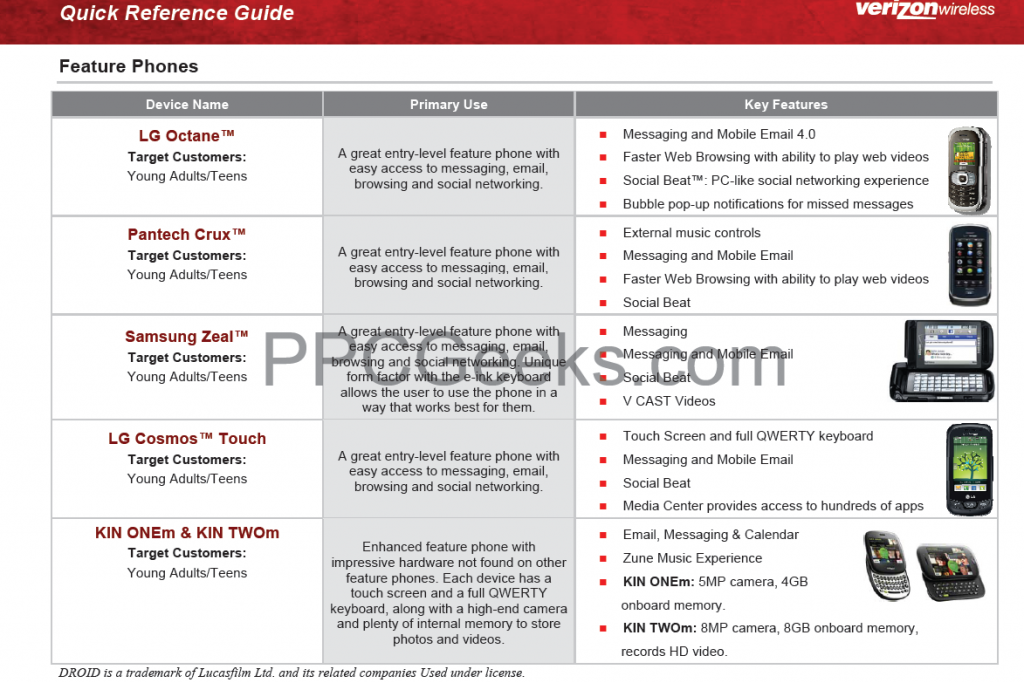
There are more variants of Android phones compared to iOS phones and each variant has different features (including different customized Android OS installed in the phone). Different set of features will attract different market segment. See the example below:

Picture 1 Q4 Roadmap (Verizon)

The picture above shows that each product has its target customers or market segment. The market is divided into several segments. If each product is targeted to a certain segment, then Android will have an advantage over iOS phones since it has more variety offerings that will fill more segments in the market.